

Turf Wars
In the wake of star wide receiver Malik Nabers' season-ending injury, a discussion of the NFL's incompetence and the owners' inexplicable ignorance to fixing the field

**I want to say this to my readers first: For a good while, I have struggled to find motivation internally to maintain my sports blog, and I was not finding a ton of inspiration or interesting news in the sports world to get myself out of that funk. For that, I am sorry. Nonetheless, I’ll continue pushing onward.**
To re-light this flame, I realized I would need to rant about a sports news story that is almost-impressively stupid. Something so inconceivably frustrating and moronic that I would have no choice but to get out of bed and unleash a fury that has been brewing for quite some time. That being said..
Yeesh, there may not be another opportunity quite like the one I have available to me this week.
The most notable and most tragic news from an eventful Sunday of NFL Week 4 action came from MetLife Stadium [yet again]: while planting his foot in an attempt to jump and catch a deep ball in the second quarter of their game against the LA Chargers, the New York Giants’ star wide-receiver Malik Nabers tore his ACL, as confirmed by the results of an MRI scan Monday morning.
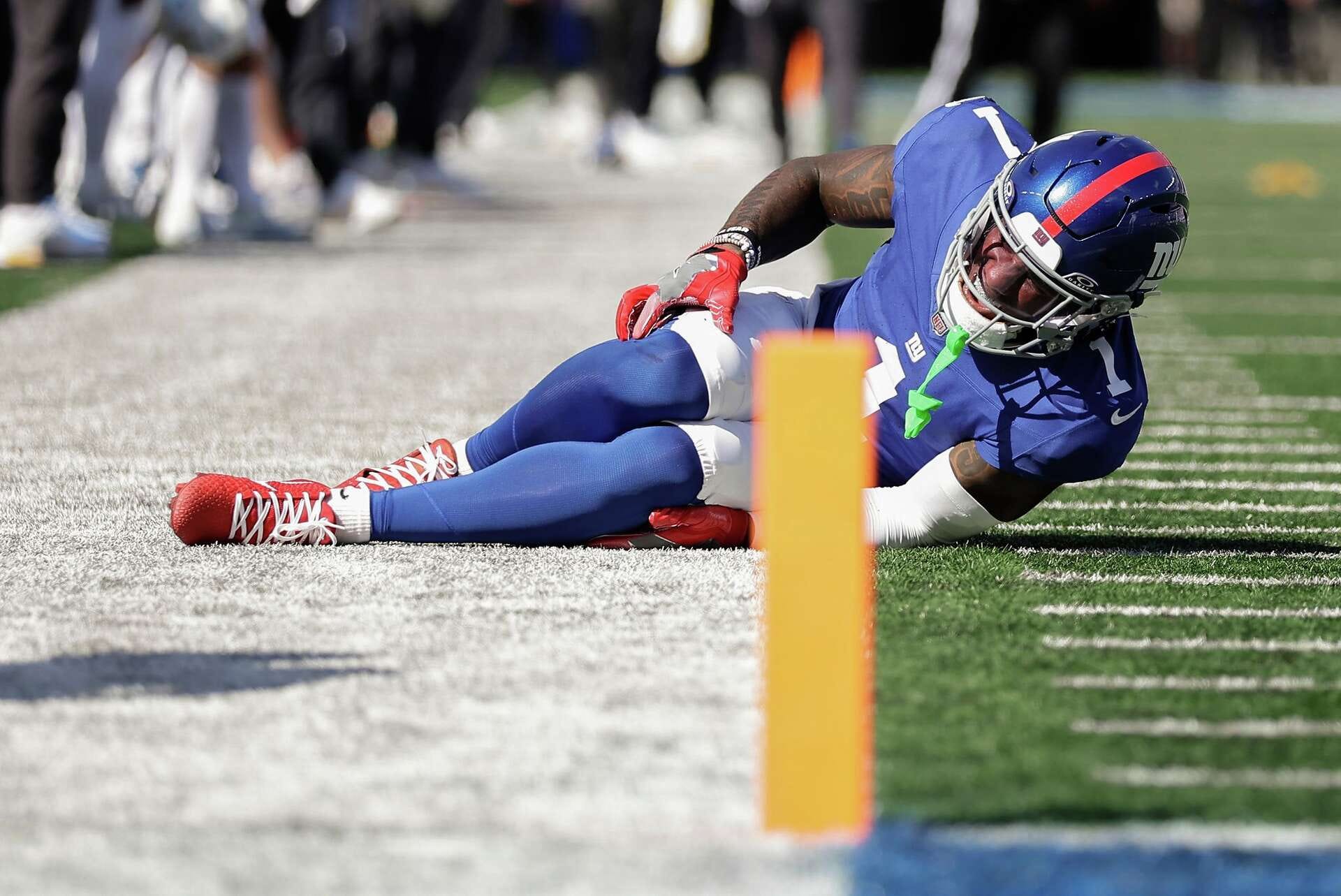
I’ll spare my readers from having to watch the unpleasant replay, but if you’re curious, I’m sure you can easily find it on X, YouTube, etc.
It’s very saddening to watch the slow-motion replay, and Nabers’ immediate reaction is devastating; he tries to go up for a deep ball, his plant-foot strikes a little too aggressively into the turf, and his knee buckles in a not-very-natural fashion. Almost instantly, Nabers appears to understand the severity of his fall. These were movements he had presumably made hundreds of times on the Giants’ natural-grass outdoor practice field (make it make sense.. 😒), and before that, he had made those same moves thousands of times on the natural-grass field in Tiger Stadium, during his time at LSU.
I’m especially eager to rant about this topic because Malik Nabers truly is one of my favorite players to watch. Considered to be “next up” on an incredible list of wildly-talented wide receivers coming out of LSU, Nabers is a young, flashy superstar who was practically guaranteed to make waves this year and continue establishing himself as one of the premier pass-catchers in the NFL.
In the long-term outlook, I really hope this does not significantly alter Nabers’ career, and I hope he is able to come back even stronger and even more athletically-impressive. The thought of another elite player’s career potentially being wrecked, largely due to the incompetency and ignorance of NFL executives and owners, is a thought that greatly displeases me.
Since 2020, there have been at least 15 significant knee or ankle (ACL or Achilles) injuries to occur during games played at MetLife Stadium:
2020: Nick Bosa (ACL) & Solomon Thomas (ACL), in the same game
2021: Blake Martinez (ACL), Jabrill Peppers (ACL), James Robinson (Achilles), TJ Brunson (Achilles)
2022: Ja’Wuan James (Achilles), Kyle Fuller (ACL), Sterling Shepard (ACL), Wandale Robinson (ACL), Dawuane Smoot (Achilles), Darrian Beavers (ACL)
2023: Aaron Rodgers (Achilles), Jaelen Phillips (Achilles)
2025: Malik Nabers (ACL)
Now, before I jump to a bunch of angry conclusions, there are a lot of factors in play, and it’s difficult (or too tedious for me, personally) to make a “control group” out of every game played on natural grass over the same period and compare injury rates. Football is a dangerous sport in general, and its action is full of aggressive, explosive movements.
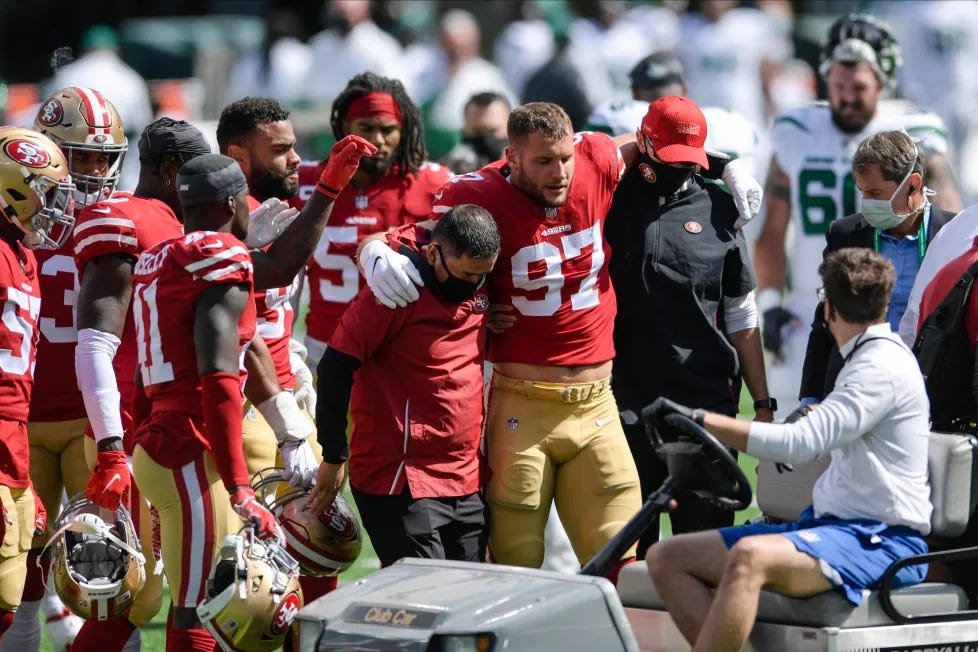
I did find this, however:
Over the same period (2020-2025), there are only three other stadiums in which 5+ ACL or Achilles injuries occurred:
Ford Field (Detroit Lions)
Bank of America Stadium (Carolina Panthers)
Huntington Bank Field (Cleveland Browns)
All three of the stadiums listed above use synthetic turf.
I don’t need to pull any nerdy stats from research articles or conduct any scientific analyses to explain how stupid and dangerous artificial turf is for professional athletes.
Forget 92% of players from the NFL Players’ Association’s poll voting they prefer real grass over artificial turf fields, basic human behavior would suggest we prefer natural grass. It’s the normal surface we all played tag and kickball on as kids. It’s the surface on which we played flag football, Little League, and AYSO, and every organized field activity ever. No free-spirited, yoga-enthusiastic “granola mom” would ever do their “grounding” and daily affirmations on a bed of blended-up rubber tire pellets. And yet, the NFL executives and the ultra-wealthy owners have convinced themselves it is normal and reasonable to host games for the most-popular (and most-violent) American sport and highest-grossing professional sports league on those blended-up tires.
Over the years, there have been plenty of different “turf systems” and blends of synthetic bullshit implemented at NFL stadiums, with MetLife’s current system being the [allegedly] highly-advanced FieldTurf Core HD. This change was made in 2023, in response to the widespread disapproval of their previous turf system, UBU Speed S5-M, which was believed to be heavily-contributory in all of the major non-contact injuries from 2020-23.
…Man, who the hell cares what dork-ass turf system they used previously, use now, or will inevitably “upgrade” to in a couple years after this current system is suspected to be just as terrible and stupid and dangerous as the last?! None of them are better than natural grass, and it’s becoming increasingly clear that it is virtually impossible for these “turf scientists” to perfectly replicate the forgiveness/impact absorption, traction, and water retention of real grass.
My proposed solution for the league that generated over $23 billion in revenue last year is simple, really:
Every single stadium must have natural grass, and it must be well-maintained throughout the entire season.
I genuinely do not care about logistical issues, maintenance costs, or the climate-related challenges for some franchises. This league makes way too much goddamn money, and it’s a shame they’ve prioritized much dumber things for so many years. And don’t tell me this dream isn’t possible, because it’s clearly demonstrated across every major soccer league in Europe.**
Ideally, every single stadium ought to have a fully-retractable field that they can maintain outdoors and roll back indoors (like the Cardinals’ State Farm Stadium [consistently voted as the best field by players,] or the Raiders’ Allegiant Stadium). I could not care less about the potential costs, or if this is even a realistic operation for some stadia.
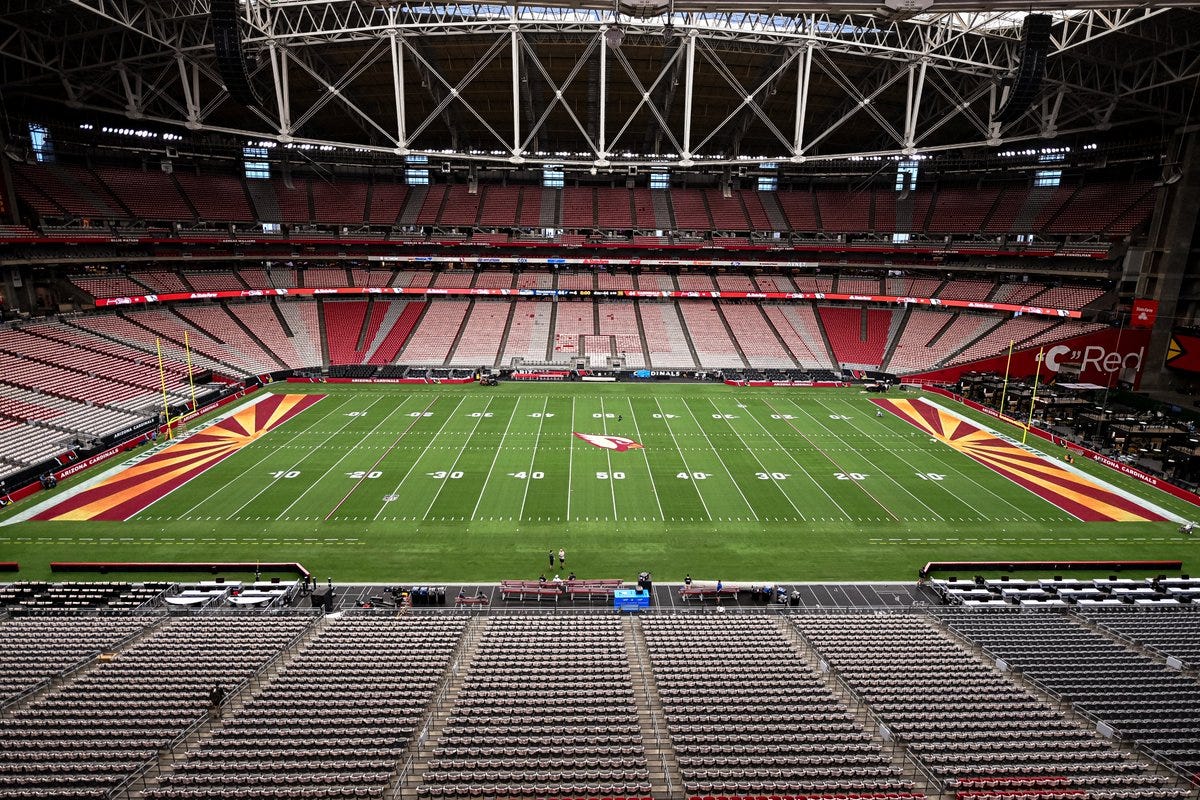
If it’s too difficult for the Giants and Jets to maintain one natural grass field, make two. Screw it, make 10 back-up fields. Better yet, have ‘em pay for a perfectly manicured, brand-new field every. single. week. And for other open-air stadiums like Seattle’s Lumen Field that might deal with too much precipitation? Easy fix, invent the most absurd, multi-million-dollar-water-collection-and-redirection system to cover the field on off-days. Create some crazy-ass technology that we can’t even conceptualize yet. (Think Iron Dome but its sole purpose is defending against raindrops.. “Aquatic Dome,” maybe. I don’t know). I don’t want to hear any lame excuses. They certainly have the money to try some shit out, considering the fact..
THE NFL MADE 23 BILLION U.S. DOLLARS LAST YEAR.
Each of the 32 NFL teams received a $432 million distribution from the $13.8 billion of national revenue generated in 2024. As for the other ~$9.2 billion, I simply don’t know what the remaining portion is considered to be or where it goes (International Revenue, I assume?). Regardless, why in the world are the stadium owners’ opinions on which surface is “best-suited to host concerts and other offseason events,” or their desire for “easier upkeep and maintenance,” or the wellbeing of their precious checkbooks, in general, even being considered?!
I hope my aforementioned take about mandating certain teams to have an entirely-new field every week doesn’t sound unreasonable, because I am so deeply serious: there’s no valid excuse as to why the franchises in New York City, Buffalo, Minnesota, Detroit, etc. don’t show more effort in prioritizing player safety and performance. Is it really such an exorbitant cost for these franchises that make almost $500M every year? Most of the 32 owners/ownership groups are worth more than $1 billion— what the hell are they spending money on? Are they spending any money at all???
**This whole discussion about American Football playing surfaces becomes more confusing and aggravating when comparing it to the current state of soccer around the world, and it becomes VERY perplexing when looking at the upcoming FIFA World Cup, co-hosted by the United States, Mexico, and Canada in 2026.
If you’re wondering how differently the Brits (and most other prominent European nations) weigh the issues of player safety and playing surfaces for their most popular sport (soccer), artificial turf has been banned by England’s football federation (the FA) since 1995. In the past 30 years, not a single game from their top four leagues has been played on anything besides natural grass.
Games in the lowest of the four English football divisions, EFL League Two, have an average attendance of ~6,000. Each club generates roughly ~£5 million annually, or ~$6.75ish million US dollars. I don’t know if my conversion rates are accurate, but I’m only including these ballpark numbers to highlight the insanity of the fact these lower-level English football clubs generate only ~0.9% of the New York Giants’ annual revenue ($765M in 2024), and yet their league executives and team owners are able to acknowledge the importance of player safety and allot the proper resources and funding to maintaining a grass playing field.
It’s not that these European football clubs ought to be commended for their efforts—no, this is common sense and should be considered non-negotiable for every professional sports franchise. Rather, why does this negligence and incompetence in American football continue to go unaddressed?
When Lionel Messi—widely considered to be the greatest footballer of all time—made his move to the MLS in 2023, there were rumors that he required a clause in his new contract allowing him to sit out games played on artificial turf (six of the 30 MLS teams use artificial turf on their home field). And although those rumors weren’t contractually true, there is an interesting pattern in which Messi develops a minor muscle injury just days before Inter Miami travels to play an away game held on artificial turf, and then he miraculously recovers to full health a day or two after said game. That, or he often sits out due to “general fatigue” and “load management.”
That is absolutely the smart decision, and I’m not the slightest bit upset at him, his athletic trainers, or anyone else involved in that move. Lionel Messi might have the most valuable feet in human history, and I’m almost surprised it wasn’t the MLS that demanded he sit out for those games played on artificial turf. The revenue he generates for the entire league is astronomical, and if Atlanta United are upset they don’t get to sell more tickets for their own stop along the annual Messi Exhibition Tour—tough shit. Invest in a better playing surface.
Across the top footy leagues in Germany, France, Spain, and most other major European countries, artificial turf playing surfaces are not permitted because—duh—the players’ preference, largely rooted in player safety, has been and will remain the top priority. Maintaining the safest, healthiest natural-grass pitch will always sit atop the totem pole of operational importance for stadiums such as Barcelona’s Camp Nou, Arsenal’s Emirates Stadium, and Bayern Munich’s Allianz Arena.
And although I was mostly-joking when I suggested we task the world’s greatest scientists and geniuses with inventing a complex water-repurposing system over Lumen Field, that idea might not sound too far-fetched to Real Madrid’s ownership group. Here’s an incredibly fascinating video showing their new stadium renovations, and what is by far the most advanced, high-tech retractable field system I’ve ever seen.
Per Forbes’ most-recent list of the 50 most-valuable sports teams in the world, Real Madrid is tied for 12th-highest with a valuation of $6.6 billion, and they’re the highest non-American franchise on the list. So yes, that mind-blowing, futuristic field-retraction system is exactly what I expect and greatly appreciate from Europe’s wealthiest and most successful soccer team.
The concept Real Madrid implemented at the Santiago Bernabéu is a wee bit different from the one I am hypothetically pitching to the Seattle Seahawks, but that is precisely the level of insane dedication and obnoxious spending I wish to see from NFL franchise owners and stadium ownership groups. If the protection and maintenance of 32 NFL-sized grass fields similarly requires some creative liberties be taken and some logistic normalities be challenged, then I want to see downright absurdity across the league.
Consideration for the glorious potential revenue and logistical challenges that come with hosting six consecutive Taylor Swift concerts in seven days will be afterthoughts—as they normally should be, right? (Looking directly at you, SoFi Stadium..)
I’ll stop rambling eventually, but the icing on the cake is this: the World Cup Final (yes, like the Final Game. The Championship Game. The Ultimate Super Bowl of The World’s Month-Long Super Bowl) is being held at MetLife Stadium. They could’ve picked any one of 50+ excellent, high-capacity sports venues in North America, and yet they chose MetLife. The same stadium the majority of NFL players absolutely abhor, and the same stadium that has become increasingly notorious and recognizable for its terrible design and terrible synthetic turf.
Of course, for this occasion in which the entire world will be watching and all of the wealthiest FIFA execs come into town, MetLife Stadium and its operators found a way to import a natural grass playing field for the biggest game of the year. I hate everything about this and I hate all of the scummy politics involved in FIFA’s historically corrupt operations, and so I already have a terrible taste in my mouth thinking about how shady and expensive the deal must’ve been for MetLife Stadium to land the prestigious honor of hosting the World Cup Final.
And if nothing else good comes from this, at the very least we gain proof that a [presumably pricey] method of implementing a natural grass field is indeed possible. Under special circumstances, and as long as someone else is willing to pay to make it happen, MetLife Stadium’s ownership shall allow a real grass field to be imported for major athletic events held within the stadium. Small victories, I suppose.
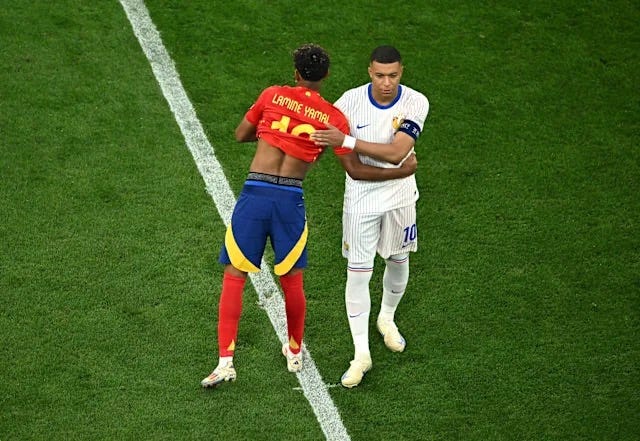
There’s no way of knowing which two nations will be fighting for that World Cup trophy next July, but there’s sure to be at least of handful of global superstar players in action. Perhaps France’s Kylian Mbappe, Spain’s Lamine Yamal, or England’s Jude Bellingham will represent one of the sides in that final. In any outcome, there was no shot FIFA or any of Europe’s domestic football federations were going to allow their best players to risk injury on an artificial turf field in their sport’s most iconic competition.
Wealthy elites from all over the world will be attendance. I anticipate some of the notable American celebrity spectators will be briefly shown throughout the television broadcast of the game— Tom Brady, LeBron James, etc. And, assuming the owner of MetLife Stadium’s resident NFL team can land a couple tix for his best player, Malik Nabers will also be in attendance.
Ten months from now, Nabers will watch the best soccer players in the world go toe-to-toe for 90 minutes on his home field an immaculate and flawlessly manicured natural grass pitch, carefully laid on top of his usual home field.
Come Monday morning, most everyone that traveled across the globe for the World Cup Final will have left NYC, and that grass field will have been removed even quicker. The 2026 NFL Preseason is less than a month away at that point, mind you.
“We must move hastily to endanger our Giants!” I imagine the MetLife Stadium workers saying as they sprinkle bits of rubber tires all over the turf.
In those weeks after the World Cup, Nabers will likely continue his ACL rehab/physical therapy activities so he can get back to playing on that godforsaken MetLife Stadium turf as soon as possible. He won’t be coming back to MetLife Stadium because he’s seeking some sort of vengeance, or because he’s trying to prove anyone wrong. Rather, Malik Nabers will come back and play on that awful turf because he’s a prideful and fearless athletic force. Because he’s a diligent worker, eager to compete and to prove he’s the best.
And also because he doesn’t have much of a choice.
Great job Ryan! I'm glad to see that you're "back in the saddle", like you told me you would be. Good luck with everything. Great seeing you at your sister's recent wedding.
Best wishes,
Sharon Keller